
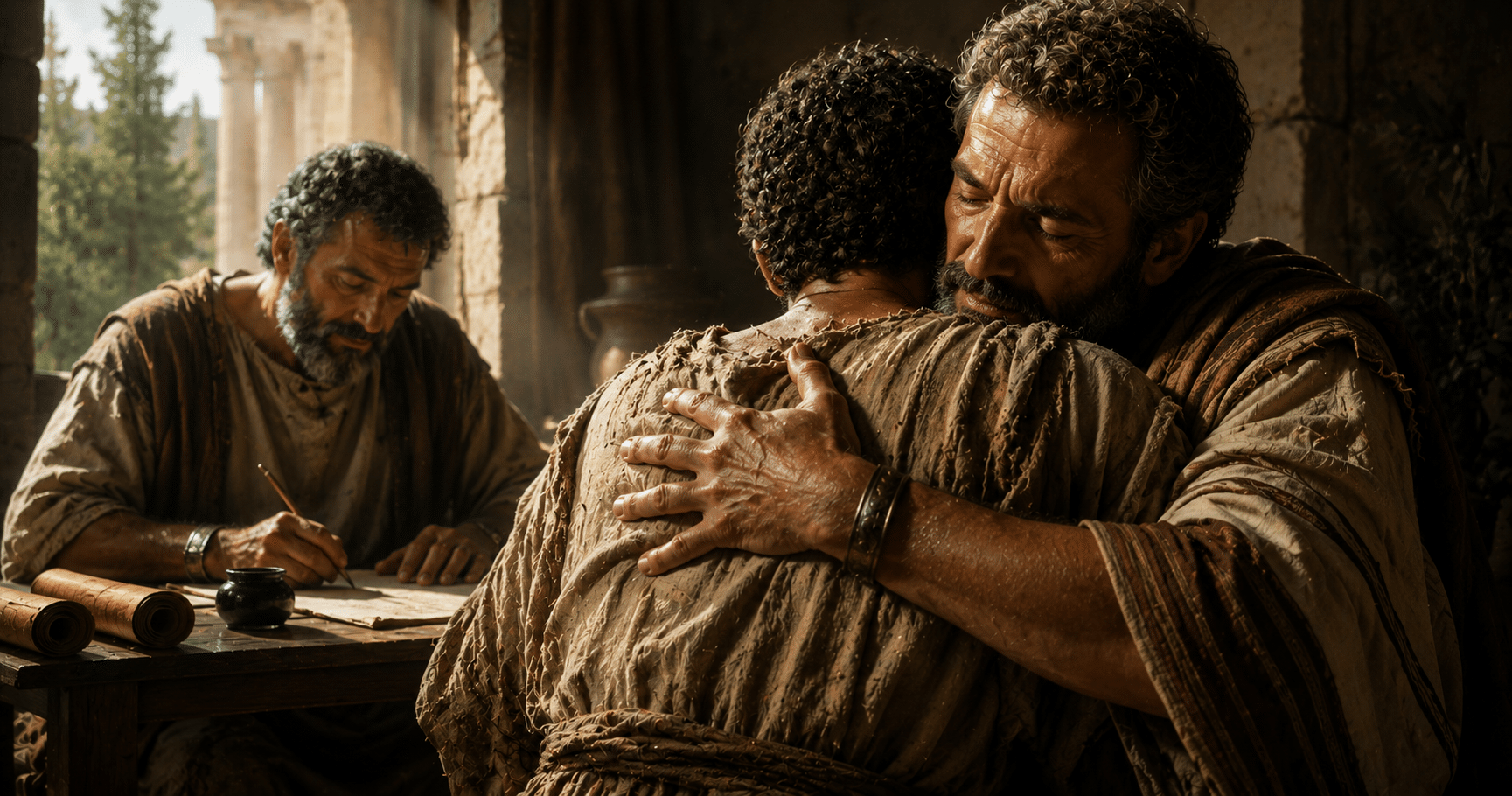
The book of Philemon may be the shortest of Paul’s letters, but it contains one of the most powerful examples of forgiveness, grace, and reconciliation found anywhere in Scripture. In only twenty-five verses, Paul addresses a deeply personal conflict between two believers and demonstrates how the Gospel has the power to restore broken relationships.
At its heart, Philemon asks a timeless question:
How should Christians treat someone whose life has been completely changed by Christ?
The letter is addressed to Philemon, a wealthy Christian who lived in Colossae. His home served as a meeting place for the local church, and he was known for his faith, generosity, and love toward fellow believers. Paul had likely led Philemon to Christ during his ministry, creating a close spiritual bond between them.
Another man plays a central role in the story.
His name was Onesimus.
Onesimus was Philemon’s servant, and at some point he fled from his master. During the ancient Roman Empire, running away was considered a serious offense. Many historians also believe Onesimus may have stolen from Philemon before leaving, based on Paul’s later comments in the letter. If that was true, Onesimus not only abandoned his responsibilities but also caused financial loss to the man who trusted him.
Under Roman law, a runaway servant could face severe punishment. Depending on the circumstances, the consequences ranged from harsh beatings to branding, imprisonment, or even death. Humanly speaking, Onesimus had every reason to remain in hiding.
But God had other plans.
Somehow, while Paul was imprisoned—most likely in Rome—Onesimus met the apostle. We are not told exactly how their paths crossed, but that meeting changed his life forever. Through Paul’s teaching, Onesimus became a Christian. The man who had once run away from responsibility now became a faithful believer eager to serve Christ.
Paul came to love Onesimus like a son.
He writes:
“I appeal to you for my child, Onesimus, whose father I became in my imprisonment.” (Philemon 10)
Paul recognized that although Onesimus had a troubled past, he was no longer the same man.
The Gospel had transformed him.
Yet becoming a Christian did not erase the need to make things right. Instead of encouraging Onesimus to remain hidden, Paul urged him to return to Philemon and face the consequences of his past. Genuine repentance includes a willingness to seek reconciliation whenever possible.
Paul then wrote one of the most personal and compassionate letters in the New Testament.
He could have commanded Philemon as an apostle.
Instead, he appealed to him in love.
Paul asked Philemon to receive Onesimus back—not merely as a servant, but as something far greater.
“…no longer as a servant but more than a servant, as a beloved brother…” (Philemon 16)
Those words would have been astonishing in the first-century Roman world.
The Gospel was redefining relationships.
Status no longer determined a person’s value.
In Christ, both Philemon and Onesimus stood as brothers before God.
Perhaps the most beautiful moment in the letter comes when Paul offers to personally repay any debt Onesimus owes.
“If he has wronged you at all, or owes you anything, charge that to my account.” (Philemon 18)
Paul willingly offered to bear the cost so that reconciliation could take place.
In many ways, this mirrors what Jesus has done for every sinner.
We owed a debt we could never repay.
Christ stepped forward and said, in effect,
“Charge it to My account.”
The cross became the payment for our sin so we could be reconciled to God.
Paul also reminds Philemon of the grace he himself had received. Since Paul had led Philemon to Christ, Philemon understood firsthand what forgiveness looked like. Having been forgiven by God, he was now called to extend that same grace to someone else.
This is one of Christianity’s greatest challenges.
Forgiveness is rarely easy.
It often costs us something.
It requires humility.
It requires mercy.
It requires trusting God with justice instead of taking revenge into our own hands.
The book of Philemon never tells us exactly how Philemon responded. However, Paul’s confidence throughout the letter strongly suggests that Philemon would choose forgiveness. Early Christian tradition even indicates that Onesimus later became a respected leader in the church, suggesting his life continued to reflect the transformation Christ had begun.
Whether every detail of that tradition is accurate or not, the message of Philemon remains unchanged.
No one is beyond God’s ability to restore.
The thief can become honest.
The runaway can return.
The broken relationship can be healed.
The guilty can become forgiven.
The Gospel changes people from the inside out.
The book of Philemon also reminds us that forgiveness does not pretend wrong never happened. Paul openly acknowledges the harm Onesimus caused. Yet he refuses to let the past define the man’s future. In Christ, repentance opens the door to restoration, and forgiveness allows healing to begin.
The message is just as powerful today.
Families are divided.
Friendships are broken.
Marriages are strained.
Churches sometimes experience conflict.
The world often encourages revenge, resentment, and bitterness.
The Gospel points us toward reconciliation whenever it is possible and honors God.
That does not mean every relationship will be fully restored.
It does mean Christians should pursue peace with humble hearts, forgive as they have been forgiven, and trust God to work where human effort falls short.
The book of Philemon may be the smallest of Paul’s letters…
But its message is enormous.
Forgiveness changes hearts.
Grace changes lives.
And the Gospel has the power to turn strangers into family…
Because every believer has been welcomed by Christ the very same way.
Bible References
- Philemon 1–25
- Colossians 3:12–14
- Ephesians 4:31–32
- Matthew 18:21–35
- Luke 15:11–32
- 2 Corinthians 5:17–21
- Romans 12:17–21
- Galatians 3:26–29