
Among all the letters written by the Apostle Paul, few paint a more complete picture of the Christian life than the Book of Ephesians. It explains who we are in Christ, what God has done for us through Jesus, and how believers should live in a world filled with temptation, conflict, and spiritual warfare. It is a letter about grace, unity, purpose, and victory.
Even after nearly two thousand years, Ephesians continues to answer one of life’s greatest questions:
What does it truly mean to belong to Christ?
The Book of Ephesians was written by the Apostle Paul around A.D. 60–62 while he was imprisoned in Rome. Though chained to a Roman guard, Paul’s concern was not for his own comfort but for the spiritual strength of the churches. He wrote to Christians living in Ephesus, one of the largest and most influential cities in the Roman Empire.
Ephesus was famous for its wealth, trade, and the magnificent Temple of Artemis, one of the Seven Wonders of the Ancient World. It was a city filled with idol worship, magic, false religion, and moral corruption. Following Jesus in Ephesus meant standing against a culture that often rejected God’s truth.
Paul knew these Christians needed encouragement.
He reminded them that their identity was no longer found in the world around them.
It was found in Christ.
One of the first truths Paul teaches is that salvation is completely the work of God’s grace. Humanity could never earn forgiveness through good works or religious achievements. God reached down to save us because of His mercy and love.
One of the Bible’s best-known passages comes from Ephesians:
“For by grace you have been saved through faith. And this is not your own doing; it is the gift of God, not a result of works, so that no one may boast.” (Ephesians 2:8–9)
Paul immediately follows this by reminding believers that salvation is not the end of God’s work.
It is the beginning.
He writes:
“For we are His workmanship, created in Christ Jesus for good works, which God prepared beforehand, that we should walk in them.” (Ephesians 2:10)
God saves us by His grace.
Then He calls us to live lives that reflect His character.
Paul also emphasizes something revolutionary for the first century.
Through Jesus, both Jews and Gentiles could become one family.
For generations, barriers had divided people by nationality, culture, and tradition. Christ broke down those walls.
The church would become one body united by one Savior.
That message still matters today.
God’s family is built upon faith in Christ—not race, wealth, social status, or human accomplishments.
The middle chapters of Ephesians focus on practical Christian living.
Paul urges believers to walk in humility, patience, forgiveness, and love. He challenges Christians to leave behind anger, bitterness, dishonesty, and corrupt speech.
Instead, he writes:
“Be kind to one another, tenderhearted, forgiving one another, as God in Christ forgave you.” (Ephesians 4:32)
Those words continue to transform marriages, friendships, families, and churches today.
One of the most beautiful descriptions of Christian love appears in Ephesians 5.
Paul compares the relationship between Christ and His church to the relationship between a husband and wife.
He tells husbands:
“Husbands, love your wives, as Christ loved the church and gave Himself up for her.” (Ephesians 5:25)
Biblical leadership is not built upon selfish authority.
It is built upon sacrificial love.
The greatest leader is the one willing to serve.
The final chapter of Ephesians contains one of the most powerful images in all of Scripture.
Paul reminds believers that life’s greatest battles are not merely physical.
They are spiritual.
He writes:
“For we do not wrestle against flesh and blood, but against the rulers, against the authorities, against the cosmic powers over this present darkness, against the spiritual forces of evil in the heavenly places.” (Ephesians 6:12)
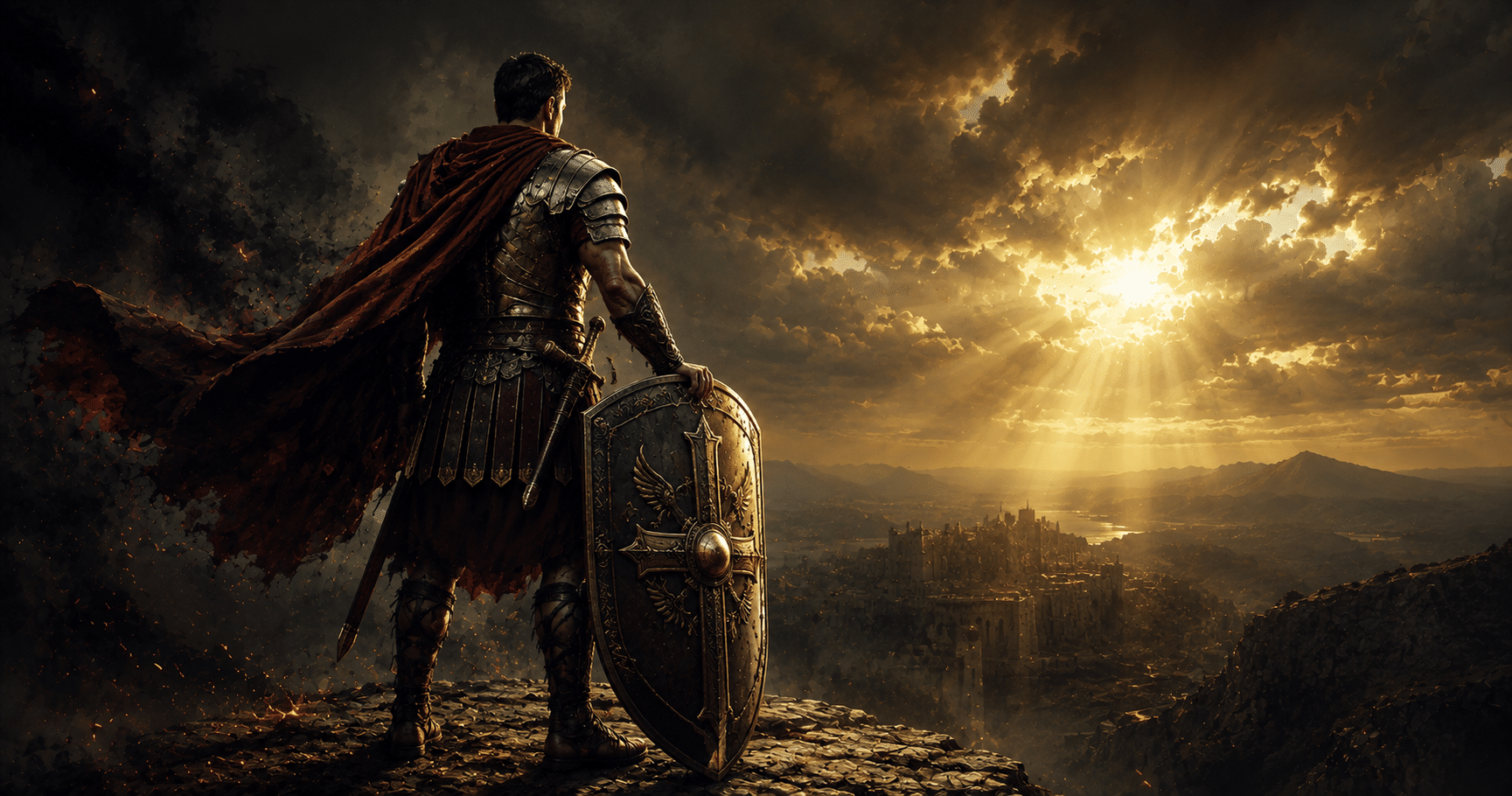
Because of that reality, Christians must put on what Paul calls the whole armor of God.
He describes each piece.
The Belt of Truth.
The Breastplate of Righteousness.
The Shoes of the Gospel of Peace.
The Shield of Faith.
The Helmet of Salvation.
The Sword of the Spirit, which is the Word of God.
These are not physical weapons.
They represent the spiritual strength every believer needs to stand firm against temptation, deception, fear, and evil.
Paul ends by urging Christians to pray continually and remain faithful no matter what challenges they face.
The Book of Ephesians matters because it reminds us who we are.
We are not defined by our failures.
We are not defined by our past.
We are not defined by what the world thinks of us.
Those who belong to Christ are forgiven, redeemed, adopted into God’s family, and called to live with purpose.
Ephesians teaches that grace saves us.
Love transforms us.
Unity strengthens us.
Truth guides us.
And God’s armor prepares us for every battle we will face.
Its message is as relevant today as it was in the first century.
The world is still full of distractions.
Temptation still exists.
Spiritual battles are still real.
But so is the victory found in Jesus Christ.
The Book of Ephesians reminds every believer that we do not fight alone.
God has already provided everything we need to stand firm, remain faithful, and live for His glory.
Bible References
- Acts 19:1–41
- Ephesians 1:3–14
- Ephesians 2:1–10
- Ephesians 2:11–22
- Ephesians 4:1–32
- Ephesians 5:1–33
- Ephesians 6:10–20
- Colossians 1:13–23
- Romans 8:31–39