
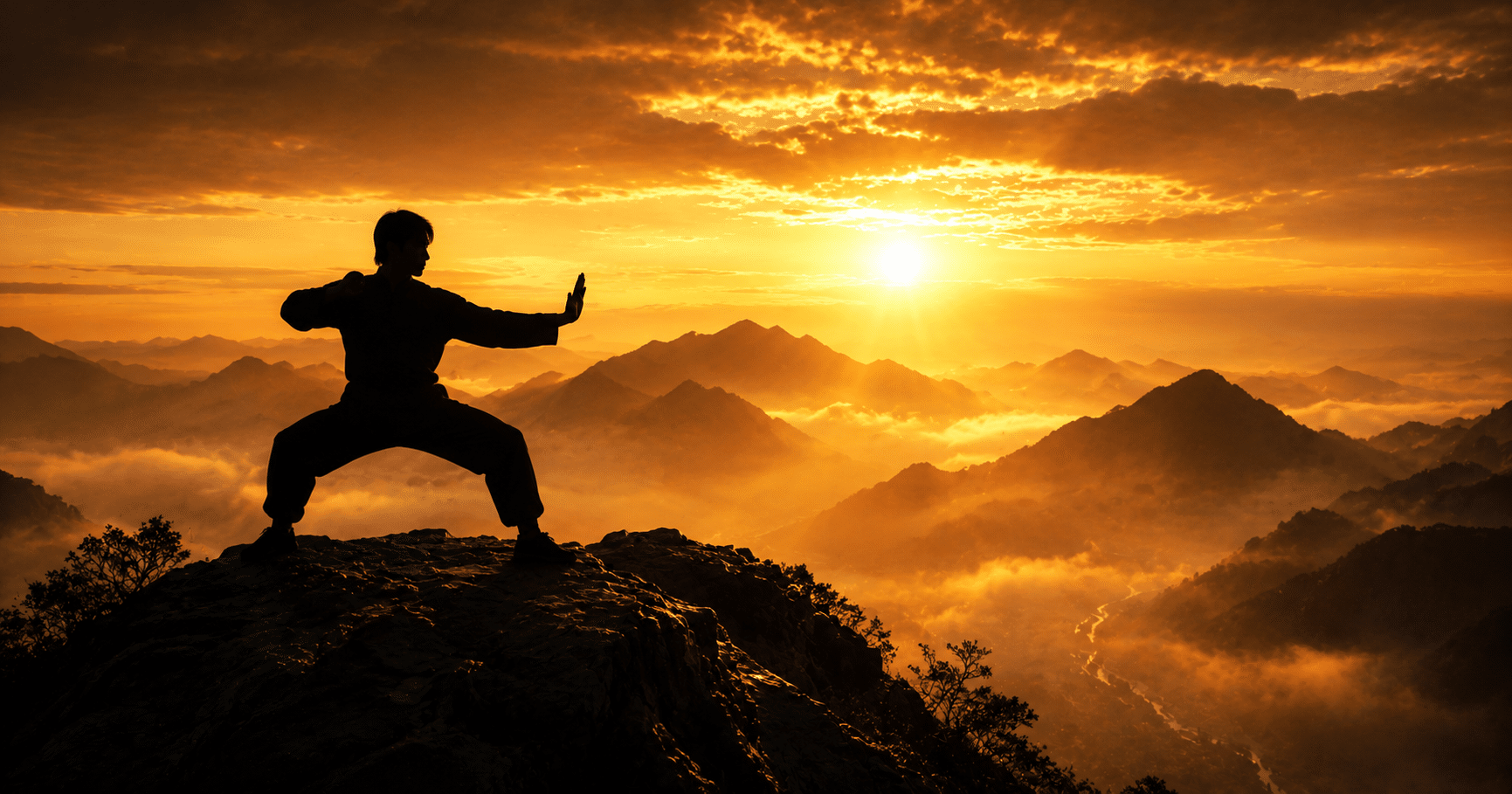
Long before the world knew his name… before the movies, the fame, the philosophy, and the legend… Bruce Lee was simply a restless young man trying to understand himself.
Most people remember Bruce Lee as the greatest martial artist who ever lived.
They remember the lightning-fast punches.
The impossible kicks.
The intense stare.
The confidence.
The movies.
But the truth is far more fascinating.
Bruce Lee was never really trying to become the world’s greatest fighter.
He was trying to become the best version of himself.
Born in San Francisco in 1940 while his parents were traveling with a Chinese opera company, Bruce was raised primarily in Hong Kong. As a child, he wasn’t the disciplined martial arts master people imagine today. Quite the opposite. He was rebellious. Constantly getting into fights. Challenging people. Testing boundaries. Looking for trouble. The energy inside him seemed almost impossible to contain.
His parents worried constantly.
Teachers struggled with him.
And the streets often became his classroom.
By his teenage years, Bruce was involved in enough street fights that his parents feared where his life was heading. Seeking discipline, they enrolled him in Wing Chun under the legendary Ip Man. It would become one of the most important decisions of his life.
Yet even then, Bruce wasn’t satisfied simply learning techniques.
Most students wanted answers.
Bruce questioned everything.
Why does this work?
Why doesn’t this work?
What happens if someone attacks differently?
Why should tradition be followed simply because it is old?
Those questions would eventually change martial arts forever.
Because Bruce Lee wasn’t born to follow paths.
He was born to create them.
As he grew older, street fights became more serious. Eventually, concerns for his safety led his family to send him back to America. He arrived with very little money, uncertainty about his future, and no guarantee of success. Like millions before him, he was chasing possibility.
What many people don’t know is how intelligent Bruce Lee truly was.
He wasn’t simply an athlete.
He was obsessed with learning.
He studied philosophy at the University of Washington. He devoured books constantly. Thousands of books. Psychology. Philosophy. Religion. Human behavior. Leadership. Fitness. Self-improvement. Western philosophy fascinated him. Eastern philosophy fascinated him. He read anything that might help him better understand life itself.
His personal library eventually contained thousands of books and notes filled with underlined passages and handwritten observations.
Bruce Lee trained his body relentlessly.
But he trained his mind even harder.
He once said:
“As you think, so shall you become.”
For Bruce, martial arts was never about violence.
It was about self-discovery.
It was about stripping away illusion.
It was about finding truth.
As his skills developed, Bruce began noticing something that bothered him deeply.
Traditional martial arts systems often became prisons.
Styles fought styles.
Schools defended schools.
Masters protected traditions.
Meanwhile reality didn’t care about traditions.
A real fight never followed a script.
Bruce believed effectiveness mattered more than ceremony.
This philosophy eventually led him to create Jeet Kune Do — “The Way of the Intercepting Fist.”
But Jeet Kune Do wasn’t really a fighting style.
It was freedom.
Bruce wanted people to stop copying and start thinking.
He wanted individuals to adapt.
To flow.
To evolve.
To become themselves.
His most famous quote perfectly captured his philosophy:
“Be water, my friend.”
Simple words.
Yet profound wisdom.
Water adapts to whatever contains it.
It can flow gently.
Or crash with unstoppable force.
It does not resist reality.
It works with it.
Bruce believed human beings should do the same.
Far beyond martial arts, this became a philosophy for life itself.
Adapt.
Grow.
Move.
Change.
Survive.
Become.
While building his schools and teaching students, Bruce began attracting attention from Hollywood. Yet success did not come easily. At the time, Asian actors were often limited to stereotypes and supporting roles. Studios doubted audiences would accept a Chinese leading man.
Bruce refused to accept their limitations.
He believed his destiny was larger than the boxes others tried placing around him.
Many executives dismissed him.
Many opportunities disappeared.
Many doors remained closed.
Yet he continued moving forward.
Years later, those same doors would be blown off their hinges.
When films like The Big Boss, Fist of Fury, and Way of the Dragon exploded across international audiences, Bruce became something larger than a movie star.
He became a symbol.
A symbol of confidence.
A symbol of discipline.
A symbol of self-belief.
A symbol of breaking barriers.
What many people don’t realize is that Bruce Lee trained with an intensity almost impossible to comprehend. Long before modern fitness culture existed, he was experimenting with weight training, interval training, nutrition, flexibility routines, cardiovascular conditioning, and performance science. He documented workouts obsessively. He analyzed results. He constantly sought improvement.
Perfection was never the goal.
Growth was.
He once said:
“The successful warrior is the average man, with laser-like focus.”
And that focus defined his life.
Yet despite all his success, Bruce remained deeply philosophical.
One of his lesser-known beliefs was that every human being carries enormous untapped potential. He believed most people spend their lives living beneath their capabilities because fear prevents them from discovering who they truly are.
He wrote:
“The key to immortality is first living a life worth remembering.”
Bruce lived exactly that way.
Then came the tragedy.
On July 20, 1973, Bruce Lee suddenly died in Hong Kong at only 32 years old.
Thirty-two.
The world was stunned.
Questions flooded everywhere.
Theories emerged.
Rumors multiplied.
Mystery surrounded his death almost immediately.
Even today, decades later, people continue debating exactly what happened.
But perhaps the greater truth isn’t how Bruce Lee died.
It’s how he lived.
Because in only thirty-two years, Bruce accomplished what many fail to achieve in eighty.
He challenged traditions.
He transformed industries.
He inspired generations.
He built bridges between cultures.
He encouraged millions to believe in themselves.
And perhaps most importantly…
He taught people that the greatest battle is never against another opponent.
It is against the limitations we place upon ourselves.
Bruce Lee’s fists made him famous.
His philosophy made him timeless.
Because beneath the martial artist…
Beneath the actor…
Beneath the icon…
Was a man relentlessly searching for truth.
A man determined to become everything God had placed within him.
And in doing so, he left behind something far greater than movies or martial arts.
He left behind a challenge.
To stop living inside cages.
To stop allowing fear to define us.
To flow like water.
To adapt.
To grow.
To become.
And that is why Bruce Lee still matters today.
Not because he could defeat other men.
But because he showed millions how to conquer themselves.
Restored Life After