
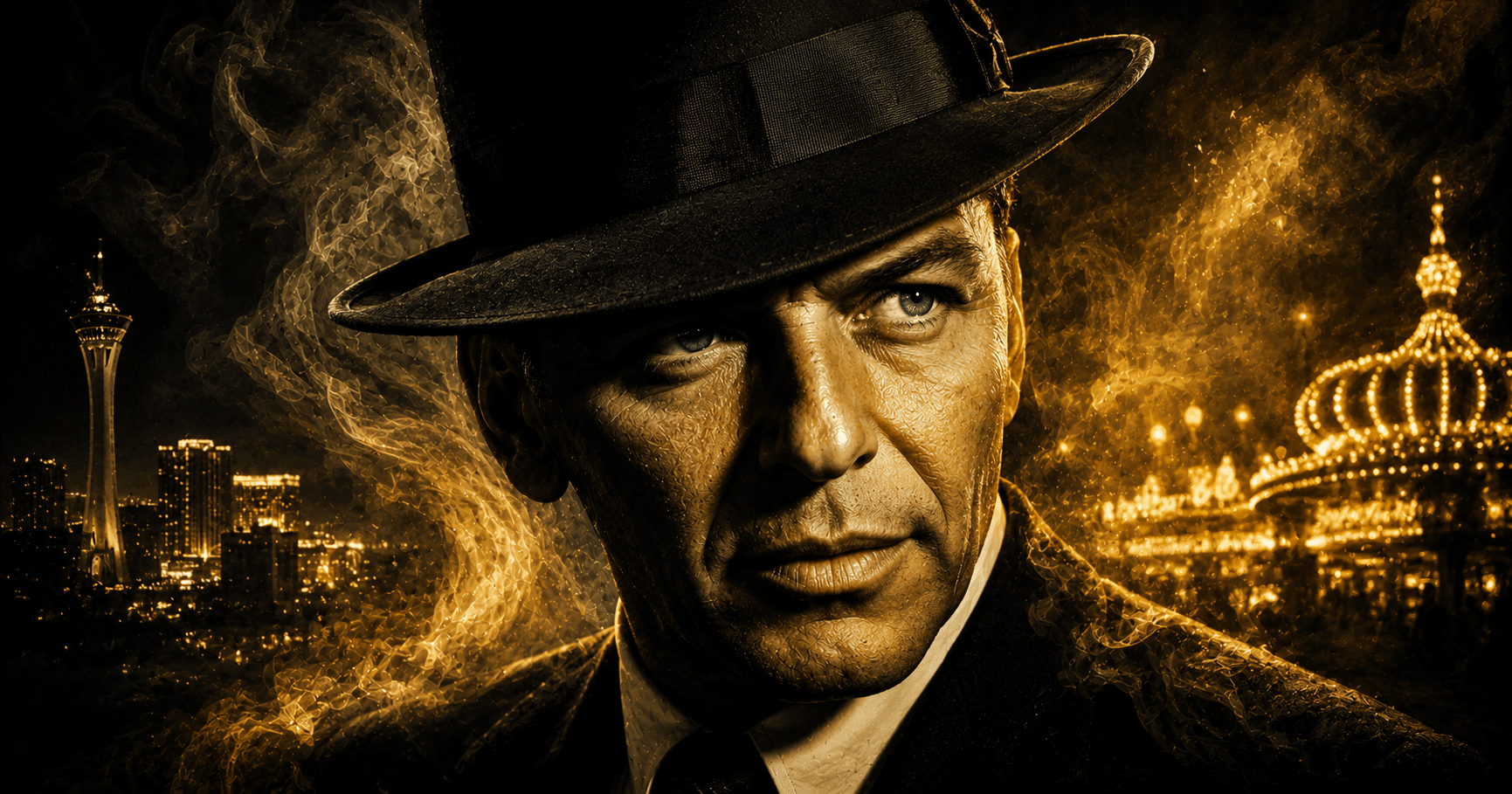
Frank Sinatra: My Way
Some people become famous.
Some become legends.
And then there was Frank Sinatra.
More than a singer. More than an actor. More than a celebrity.
For much of the twentieth century, Frank Sinatra was America itself—confident, complicated, talented, flawed, charming, dangerous, and unforgettable.
His story is one of incredible success, crushing failures, loyalty, controversy, love, heartbreak, power, and redemption. It is a story that could only happen once.
A Skinny Kid From Hoboken
Frank Sinatra was born Francis Albert Sinatra on December 12, 1915, in Hoboken, New Jersey.
His parents were Italian immigrants who came to America searching for opportunity. Life was not glamorous. Hoboken was a rough, working-class town filled with immigrants struggling to build better lives for their families.
Frank was an only child and developed a fierce confidence early in life. He was small, skinny, and often underestimated. But he possessed something impossible to teach—a belief that he was destined for something greater.
Everything changed when he heard singers on the radio, especially Bing Crosby. Sinatra became obsessed. He wasn’t interested in a normal life. He wanted to sing.
The problem was nobody knew who Frank Sinatra was.
Yet.
The Voice That Changed Everything
After years of performing in clubs and local groups, Sinatra got his big break with bandleaders Harry James and later Tommy Dorsey.
Then something remarkable happened.
America fell in love.
Not just with his voice.
With him.
Women screamed at his concerts decades before Beatlemania existed. Thousands of teenage girls packed theaters and fainted during performances. Newspapers struggled to explain the phenomenon.
The term “bobby-soxers” became synonymous with the young female fans who worshipped him.
For the first time, a singer wasn’t simply entertaining audiences.
He was creating hysteria.
The skinny kid from Hoboken had become a superstar.
Fame, Power, and the Rat Pack
The 1950s and 1960s cemented Sinatra’s place in history.
His music dominated the charts.
His films won awards.
His presence filled every room he entered.
Songs such as “Fly Me to the Moon,” “I’ve Got You Under My Skin,” “The Way You Look Tonight,” and “New York, New York” became timeless classics.
Then came the Rat Pack.
Alongside Dean Martin, Sammy Davis Jr., Peter Lawford, and Joey Bishop, Sinatra became the unofficial king of Las Vegas.
The Rat Pack represented a lifestyle many Americans envied.
Luxury.
Fame.
Beautiful women.
Endless parties.
Private jets.
Front-row access to power.
It looked like the perfect life.
But perfect lives rarely exist.
The Mafia Rumors
No discussion of Frank Sinatra can ignore the subject that followed him throughout his career—organized crime.
For decades, rumors linked Sinatra to powerful mob figures.
He was known to socialize with individuals who were connected to organized crime. Photographs, meetings, and friendships fueled speculation for years.
Some believed the connections helped his career.
Others believed the stories were exaggerated.
The truth is more complicated.
Investigations, biographies, and government files documented relationships and associations, but no evidence ever proved Sinatra was a member of organized crime himself.
What is certain is that the rumors followed him for most of his life.
And Sinatra rarely helped his own case.
He was fiercely loyal to friends and often refused to distance himself from controversial figures.
That loyalty became part of his legend.
And part of his controversy.
The Dark Years
Despite all the success, Sinatra’s life was far from perfect.
His first marriage collapsed.
His passionate relationship with actress Ava Gardner became one of Hollywood’s most famous and turbulent romances.
Career setbacks arrived.
His popularity faded.
Movie roles disappeared.
Record sales declined.
At one point, he reportedly considered ending his own life after believing his career was over.
Imagine that.
One of the most famous entertainers in the world sitting alone, wondering if his best days were behind him.
It is a reminder that fame cannot protect anyone from despair.
Money cannot guarantee happiness.
Success cannot silence loneliness.
The Greatest Comeback
Most careers end when popularity fades.
Sinatra’s did not.
He reinvented himself.
His role in the film “From Here to Eternity” earned him an Academy Award and resurrected his career.
What followed became one of the greatest comebacks in entertainment history.
The voice matured.
The songs deepened.
The performances became more emotional.
He wasn’t merely singing words anymore.
He was living them.
Every heartbreak.
Every victory.
Every regret.
Every lesson.
Audiences could hear it all in his voice.
My Way
If one song captures Frank Sinatra’s life, it is “My Way.”
Ironically, he did not write it.
Yet no song became more closely associated with a person.
The lyrics tell the story of a man looking back on his life—the triumphs, the failures, the risks, and the consequences.
One of the most memorable lines says:
“I faced it all and I stood tall…”
And another:
“Regrets, I’ve had a few…”
Those words resonated because they sounded true.
Sinatra wasn’t perfect.
He never pretended to be.
He lived boldly.
Sometimes wisely.
Sometimes recklessly.
But always on his own terms.
The Final Curtain
By the time Frank Sinatra passed away on May 14, 1998, he had become more than a performer.
He was an American icon.
A symbol of an era.
A voice that transcended generations.
The little boy from Hoboken who dreamed of becoming a singer had achieved something almost impossible.
His records sold by the millions.
His films became classics.
His influence shaped popular music forever.
Yet perhaps the most fascinating thing about Frank Sinatra is that his story reminds us that even legends are human.
Behind the spotlight was a man.
Behind the applause were struggles.
Behind the confidence were doubts.
Behind the fame were scars.
That is why people still talk about him decades later.
Not because he was perfect.
But because he was real.
And whether you loved him or hated him, agreed with him or not, one thing is certain:
Frank Sinatra lived life exactly the way the title of his most famous song suggested.
His way.