
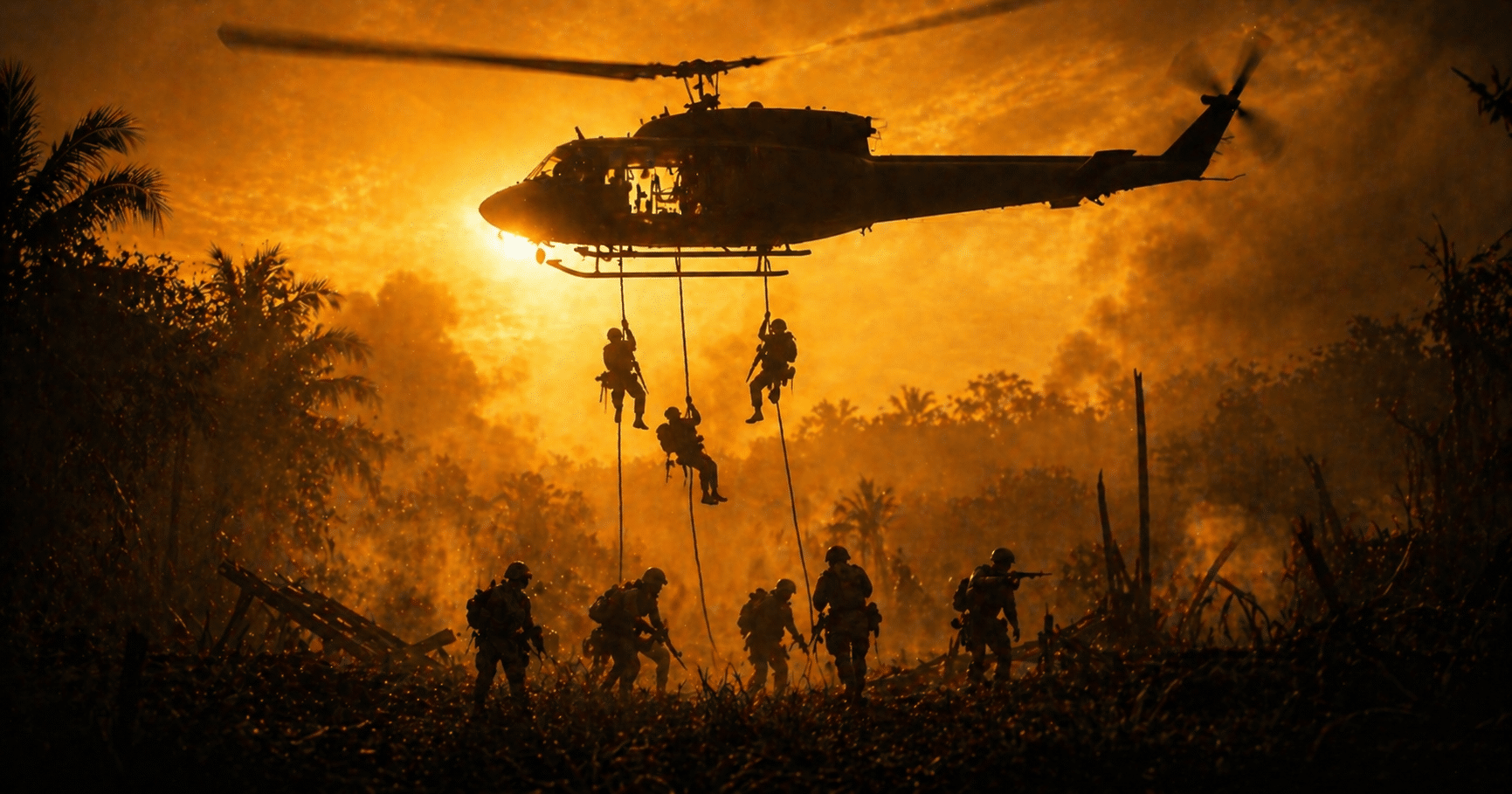
Before the medals… before the speeches… before presidents placed honor around his neck—there was a boy born into hardship, pain, and a world that did not hand him much.
His name was Roy Benavidez.
He was born in Texas in 1935, one of many children in a poor family of Mexican and Yaqui heritage. He lost both parents at a young age and was raised by relatives. Poverty was not an event in Roy’s life—it was an environment. Hardship was normal. Struggle was daily. Work was expected.
Some men are introduced to adversity later.
Roy grew up in it.
He left school young to help support family and eventually joined the military. For many young men from hard beginnings, service offered structure, purpose, and a road forward. Roy found all three.
But his life would be marked not by comfort…
by courage.
Before the famous day in Vietnam, Roy had already suffered severe injuries in an earlier mission. He stepped on a landmine and was badly wounded in the back and legs. Doctors believed he might never walk again.
Think about that.
For many people, that becomes the end of the story.
But Roy refused it.
He trained through pain. Crawled, dragged himself, forced movement back into damaged limbs. He reportedly used bedposts and walls to help himself stand and relearn how to move. Where many would accept defeat, he chose war with limitation.
That tells you who he was before the jungle ever did.
Then came May 2, 1968.
Vietnam.
A 12-man Special Forces reconnaissance team was deep in hostile territory near the Cambodian border when they were suddenly surrounded by a much larger North Vietnamese force. Gunfire exploded from all directions. Men were hit. Radio calls for help cut through chaos.
A rescue helicopter arrived.
On board was Roy Benavidez.
He was not ordered to jump into that hell.
He chose to.
Armed with little more than a knife and medical bag, Roy leapt from the helicopter into enemy fire and ran toward dying men.
That decision alone tells the story.
Some men run from bullets.
Some run toward them if others need help.
The jungle was madness.
Smoke. Screams. Mud. Blood. Gunfire tearing through trees. Men pinned down, wounded, disoriented, trying simply to stay alive. Roy moved through it all—dragging wounded soldiers, giving medical aid, organizing defense, gathering classified documents, returning fire, calling air support, carrying bodies, carrying the living, carrying hope.
And he was being hit while doing it.
Shot.
Then shot again.
Shrapnel tearing flesh.
Bayoneted in hand-to-hand fighting.
Bludgeoned.
Still moving.
Try to imagine the will required.
Your body saying stop.
Blood leaving you.
Pain screaming through nerves.
And yet your mind answers:
No.
Not until everyone is out.
For nearly six hours, Roy fought and rescued under relentless enemy assault. He loaded wounded men onto helicopters. Then went back for more. Again and again. Each time risking death. Each time refusing to leave others behind.
This is where character is revealed.
Not in speeches.
Not online.
Not when life is easy.
When death is close and others depend on you.
By the time the final extraction came, Roy had suffered dozens of wounds. Accounts describe bullets, bayonet injuries, grenade fragments, crushing trauma. He was barely recognizable beneath blood and mud.
He collapsed onto the helicopter.
Believed dead.
Placed in a body bag.
Let that sink in.
The man who had just saved lives was being counted among the dead.
At the field hospital, they prepared to zip the bag.
Then Roy spit in the medic’s face.
A final act of defiance against death itself.
He was alive.
Barely.
But alive.
He survived.
Years of recovery followed. Pain. Rehabilitation. The invisible cost that often comes after visible heroism. Many warriors leave the battlefield carrying wounds others cannot see.
For years, his full heroism was not properly recognized because classified mission details delayed the process. Eventually, in 1981, Ronald Reagan presented Roy Benavidez with the Medal of Honor.
During the ceremony, Reagan famously said if the story had been a movie script, no one would have believed it.
That’s how extraordinary it was.
But medals, while deserved, are not the deepest measure of Roy.
The deepest measure is this:
When others were trapped… he went in.
When wounded… he kept serving.
When presumed dead… he kept breathing.
When life said enough…
he answered more.
After the Story — Restored Life After
Most people will never face a jungle firefight.
But many face battles where everything in them wants to quit.
Pain.
Loss.
Depression.
Failure.
Betrayal.
Fear.
A season that feels like it may bury you.
Roy’s story teaches something powerful:
Your body may be wounded.
Your circumstances may be brutal.
Others may count you out.
But as long as there is breath in you…
the story is not over.
Some people have already placed you in a body bag mentally.
They assume you’re finished.
Too broken.
Too old.
Too damaged.
Too late.
Spit in the face of that lie.
Live.
Rise.
Move again.
Bring your wounds to God.
He specializes in restoring what battle damaged.
He can give strength where there is none.
Purpose where there was pain.
Life where others saw an ending.
Maybe today you can barely stand.
Stand anyway.
Maybe you are bleeding inside.
Keep going anyway.
Maybe no one sees your fight.
God does.
Roy Benavidez proved that impossible odds do not decide outcomes.
Will does.
Faith does.
Courage does.
And when life tries to zip the bag on your future…
move.
Breathe.
Refuse.
That is Restored Life After.