
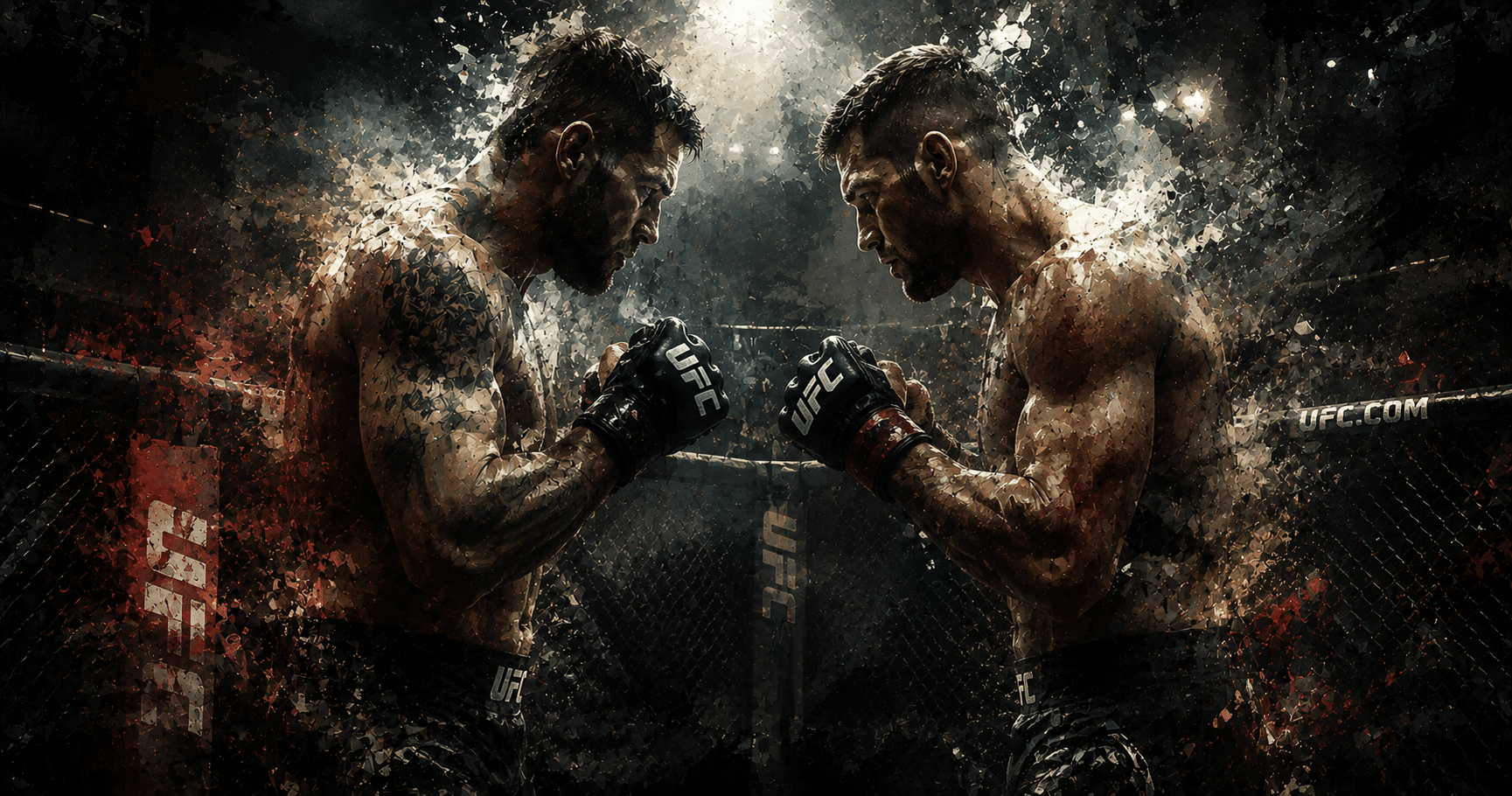
Today, the Ultimate Fighting Championship is one of the biggest sports organizations in the world. Its events sell out arenas on nearly every continent. Millions of fans tune in to watch the world’s greatest fighters compete inside the famous Octagon. Champions become international celebrities, and the UFC is now worth billions of dollars.
But none of that seemed possible in 1993.
In fact, many people believed the UFC would never survive.
Politicians called it barbaric.
Television networks refused to air it.
Entire states banned it.
Critics demanded it be shut down forever.
The UFC’s journey from an outlaw spectacle to a global sports empire is one of the greatest comeback stories in sports history.
The idea behind the UFC began with a simple question that had fueled arguments for generations.
Which martial art was truly the best?
Was it boxing?
Karate?
Judo?
Wrestling?
Kung Fu?
Brazilian Jiu-Jitsu?
For decades, every style claimed superiority, but no one had ever created an event where they could all compete under one roof with almost no restrictions.
That idea fascinated businessman Art Davie.
Working alongside members of the Gracie family, particularly Rorion Gracie, they envisioned a tournament unlike anything sports fans had ever witnessed. Instead of promoting one fighting style, they would invite representatives from completely different disciplines and allow them to compete until one emerged victorious.
Their goal was not simply entertainment.
It was to answer an age-old question.
On November 12, 1993, the first Ultimate Fighting Championship took place at McNichols Sports Arena in Denver, Colorado.
The rules were almost nonexistent.
There were no weight classes.
No rounds.
No judges.
Very few fouls.
The event featured kickboxers, boxers, wrestlers, karate champions, sumo wrestlers, savate fighters, and practitioners of Brazilian Jiu-Jitsu.
Many expected the largest and strongest competitors to dominate.
Instead, a relatively small Brazilian named Royce Gracie shocked the world.
Weighing barely 180 pounds, Gracie calmly submitted opponent after opponent using Brazilian Jiu-Jitsu, a martial art almost unknown outside Brazil. Instead of relying on brute strength, he demonstrated leverage, positioning, and technique. The victories forever changed martial arts.
Suddenly, every serious fighter wanted to learn Jiu-Jitsu.
The first UFC became an instant sensation.
Pay-per-view numbers exceeded expectations.
Fans were fascinated.
Critics were horrified.
The event quickly earned the nickname:
“No Holds Barred Fighting.”
As popularity grew, so did the backlash.
Perhaps no opponent proved more determined than U.S. Senator John McCain.
After watching footage from early UFC events, McCain described them as “human cockfighting.” He wrote letters urging governors, athletic commissions, and cable companies to stop broadcasting the events.
One by one, states banned the UFC.
Cable providers dropped pay-per-view broadcasts.
Sponsors disappeared.
Public opinion turned sharply against the organization.
By the late 1990s, the UFC was on life support.
The company was losing millions of dollars.
Many believed professional mixed martial arts had reached its end.
Then everything changed.
In January 2001, casino executives Frank Fertitta III and Lorenzo Fertitta purchased the struggling UFC for just $2 million.
To lead the company, they hired their longtime friend Dana White, a passionate boxing trainer and fight manager who believed the sport deserved a second chance.
At the time, many people thought they had wasted their money.
Instead, they quietly began rebuilding the organization from the ground up.
The new owners understood something important.
If mixed martial arts wanted to survive, it needed legitimacy.
Working with athletic commissions, they helped establish the Unified Rules of Mixed Martial Arts.
Weight classes were introduced.
Rounds were added.
More than thirty fouls were created.
Medical requirements became stricter.
Referee authority increased.
The goal was simple.
Protect the fighters while preserving the excitement.
The transformation was slow.
Money continued disappearing.
The UFC reportedly lost tens of millions of dollars during its first several years under new ownership.
There were moments when even insiders questioned whether the company could survive.
Then came a television show that changed everything.
In 2005, Spike TV aired The Ultimate Fighter.
The reality series followed aspiring fighters living together while competing for a UFC contract.
The finale featured Forrest Griffin and Stephan Bonnar in what many still consider one of the greatest fights in MMA history.
The bout captivated viewers across America.
Almost overnight, public opinion shifted.
Fans who had dismissed the UFC as violent spectacle suddenly recognized the extraordinary athleticism, discipline, and heart required to compete at the highest level.
The UFC had finally found its audience.
From that moment forward, growth exploded.
Legends emerged.
Chuck Liddell became one of the organization’s first mainstream stars.
Randy Couture inspired fans with his toughness and professionalism.
Matt Hughes dominated the welterweight division.
Georges St-Pierre demonstrated complete martial arts mastery.
Anderson Silva redefined precision striking.
BJ Penn showcased remarkable versatility.
As the years passed, the UFC expanded internationally.
New champions arrived from every corner of the world.
The organization entered Canada, Brazil, Europe, Australia, Asia, the Middle East, and beyond.
Mixed martial arts was no longer viewed as a fringe attraction.
It had become a global sport.
The next era introduced even larger personalities.
Jon Jones displayed extraordinary talent inside the cage while battling personal controversy outside it.
Ronda Rousey transformed women’s MMA forever, proving female fighters could become global superstars.
Then came Conor McGregor.
His confidence, charisma, and knockout power turned him into one of the biggest names in sports. Love him or hate him, McGregor attracted millions of new fans and shattered pay-per-view records.
The UFC continued evolving.
Champions such as Khabib Nurmagomedov, Israel Adesanya, Amanda Nunes, Alex Pereira, Islam Makhachev, and many others carried the sport into a new generation.
In 2016, the UFC reached another historic milestone.
Entertainment giant WME-IMG purchased the organization for approximately $4 billion, making it one of the largest transactions in sports history.
It was a staggering transformation.
Just fifteen years earlier, the company had nearly disappeared.
Today, the UFC continues setting attendance records, expanding internationally, signing elite athletes from around the world, and broadcasting events to hundreds of millions of viewers. The Octagon has become one of the most recognizable symbols in professional sports.
Yet perhaps the greatest lesson in the UFC’s story has nothing to do with fighting.
Its founders asked a question no one else dared to answer.
Its athletes proved that discipline could overcome raw strength.
Its leaders refused to quit when nearly everyone predicted failure.
The UFC reminds us that success is rarely immediate.
It is built through setbacks, criticism, adaptation, and relentless perseverance.
The organization that many once called impossible became one of the most successful sports promotions in history because it never stopped evolving.
Every champion who walks into the Octagon carries that history with them.
Not just the victories.
But the years when there were no guarantees.
No acceptance.
No certainty.
Only a belief that the fight was worth continuing.
Sometimes the greatest victories happen long before the referee raises a hand.
Sometimes they happen the moment you refuse to quit.